Introduction
In modern workplaces, productivity is no longer just about time management—it is about attention management. Professionals today are not only balancing workloads but also navigating constant interruptions that fragment focus and reduce efficiency.
This raises an important question: digital vs human distractions—which one hurts productivity more?
From endless notifications and social media to talkative colleagues and unplanned conversations, distractions come from multiple directions. While both digital and human interruptions impact performance, their nature, frequency, and long-term effects differ significantly.
Understanding this distinction is critical in the AI-driven era, where deep work, focus, and cognitive clarity are becoming competitive advantages.
Understanding the Nature of Digital Distractions
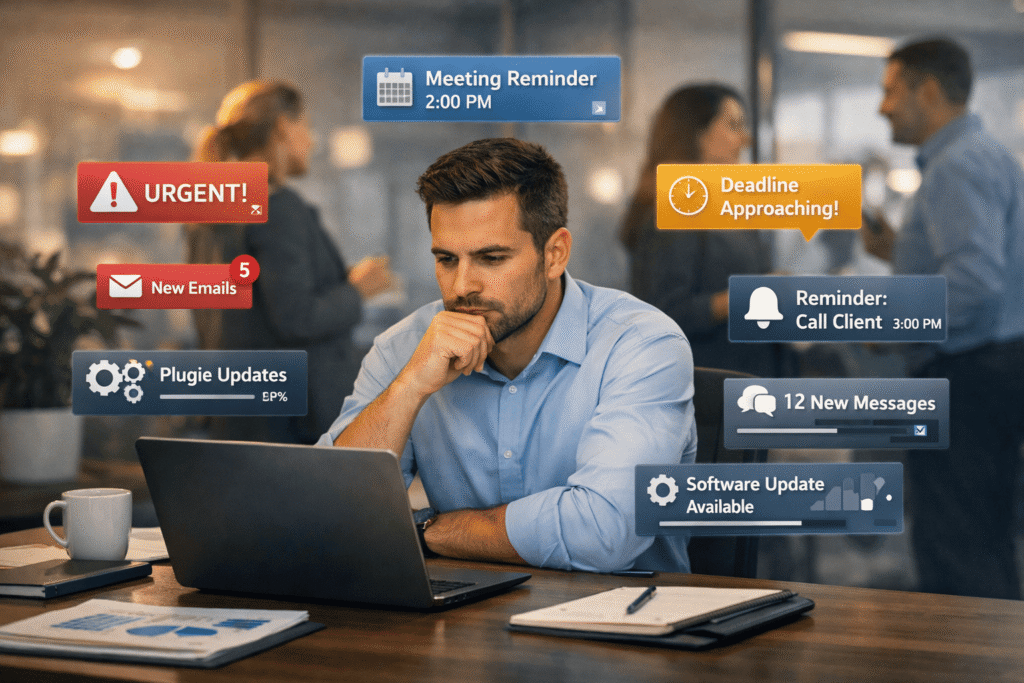
Digital distractions are designed to capture and retain attention. Notifications, emails, messaging apps, and social media platforms create continuous interruptions that pull professionals away from focused work.
What makes digital distractions particularly challenging is their persistence. They are always accessible, often personalized, and difficult to ignore. Even a brief glance at a notification can lead to extended periods of lost focus.
In addition, digital environments encourage multitasking, which reduces the quality of work and increases cognitive fatigue. Over time, this creates a cycle where attention becomes fragmented and productivity declines.
Key Points:
- Digital distractions are constant and easily accessible
- Notifications interrupt deep focus frequently
- Multitasking reduces work quality and efficiency
- Prolonged exposure leads to cognitive fatigue
The Impact of Human Distractions in the Workplace
Human distractions, such as conversations with colleagues, meetings, or interruptions from team members, are a natural part of workplace dynamics. Unlike digital distractions, they are often unstructured and less predictable.
While these interruptions can disrupt focus, they also serve an important role in collaboration, relationship-building, and problem-solving. Not all human distractions are negative—many contribute to team cohesion and innovation.
However, when unmanaged, frequent interruptions can break concentration and delay task completion. The challenge lies in balancing collaboration with focused work time.
Key Points:
- Human distractions are less frequent but more unpredictable
- Some interruptions support collaboration and teamwork
- Excessive interruptions reduce focus and efficiency
- Balance is needed between interaction and concentration
Digital vs Human Distractions: A Deeper Comparison
When comparing digital vs human distractions, the key difference lies in their intensity and frequency. Digital distractions are continuous and often self-initiated, while human distractions are intermittent and externally driven.
Digital interruptions tend to fragment attention throughout the day, making it difficult to enter a state of deep work. Human distractions, on the other hand, may cause temporary disruption but are usually easier to recover from.
In many cases, digital distractions have a more cumulative impact on productivity because they create ongoing interruptions that reduce overall cognitive capacity.
Key Points:
- Digital distractions are continuous; human distractions are occasional
- Self-initiated distractions are harder to control
- Digital interruptions have a cumulative negative impact
- Human distractions are often easier to recover from
The Role of AI and Technology in Increasing Distractions
The rise of AI-powered tools and platforms has amplified digital distractions. Smart notifications, personalized content, and algorithm-driven feeds are designed to maximize engagement, often at the cost of productivity.
At the same time, AI tools are also being integrated into workplaces to improve efficiency. This creates a paradox—technology that can enhance productivity can also become a source of distraction if not managed properly.
Professionals must learn to use AI intentionally, setting boundaries around when and how they engage with digital tools. Without this discipline, the benefits of technology can quickly turn into productivity challenges.
Key Points:
- AI-driven platforms increase engagement and distraction
- Smart notifications are designed to capture attention
- Technology can both enhance and reduce productivity
- Intentional use of AI tools is essential
Strategies to Manage Both Types of Distractions
Improving productivity requires addressing both digital and human distractions with practical strategies. This involves creating systems that protect focus while still allowing for necessary collaboration.
For digital distractions, techniques such as disabling non-essential notifications, scheduling focused work blocks, and using productivity tools can help maintain concentration.
For human distractions, setting clear boundaries, communicating availability, and structuring collaboration time can reduce unnecessary interruptions without harming teamwork.
The goal is not to eliminate distractions entirely, but to manage them in a way that supports sustained focus and effective work.
Key Points:
- Limit unnecessary notifications and digital interruptions
- Schedule dedicated time for deep work
- Communicate boundaries to manage human interruptions
- Balance focus with collaboration for optimal productivity
Building a Focus-Oriented Work Culture
Beyond individual strategies, organizations play a critical role in shaping how distractions are managed. A work culture that prioritizes constant availability can unintentionally encourage interruptions and reduce productivity.
In contrast, a focus-oriented culture values deep work, respects boundaries, and supports flexible work patterns. This includes rethinking meeting structures, communication norms, and expectations around responsiveness.
Organizations that address distractions at a systemic level create environments where employees can perform at their best without constant disruption.
Key Points:
- Workplace culture influences distraction levels
- Constant availability reduces productivity
- Structured communication improves focus
- Focus-oriented environments support better performance
Closing Reflection
Both digital and human distractions affect productivity, but their impact is not equal. Digital distractions, with their constant presence and cumulative effect, often pose a greater challenge in today’s work environment.
However, the real issue is not choosing between one or the other—it is learning how to manage both effectively. In an AI-driven world where attention is increasingly fragmented, the ability to protect focus has become a critical professional skill.
Ultimately, productivity is no longer defined by how much time we spend working, but by how well we manage the quality of our attention.
References and Further Reading
- American Psychological Association – Research on attention and workplace productivity: https://www.apa.org
- Harvard Business Review – Articles on focus, deep work, and productivity: https://hbr.org
- McKinsey & Company – Workplace productivity and digital transformation insights: https://www.mckinsey.com
- World Economic Forum – Future of work and attention economy research: https://www.weforum.org